About the Doppler Effect simulation
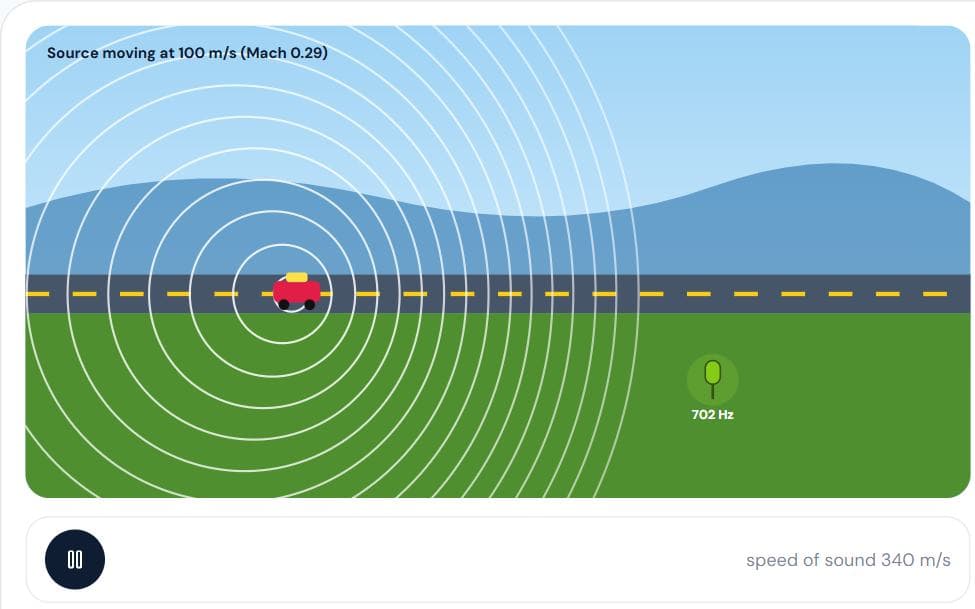
When a source of sound moves towards you, each wave crest is emitted a little closer than the last, so the crests arrive more often: you hear a higher pitch. As it moves away the pitch drops. A moving listener also meets the crests more or less often. This is the Doppler effect, and it is why a passing ambulance's siren seems to fall in pitch.
This Doppler effect simulation draws the wavefronts as they spread from a moving siren, computes the frequency heard at a microphone you can move, plots it against time and can play it as sound. Push the source past 340 m/s to see the fronts pile into a Mach cone.
Also covers: apparent frequency, moving source, moving observer, sonic boom, mach cone, siren pitch.